Materials

The material comes first. The rest follows.

The materials are what drives Lili Lamps. I look for the ones that take the least and look the best, and I tell you everything I know about them. Including what I don't know yet.

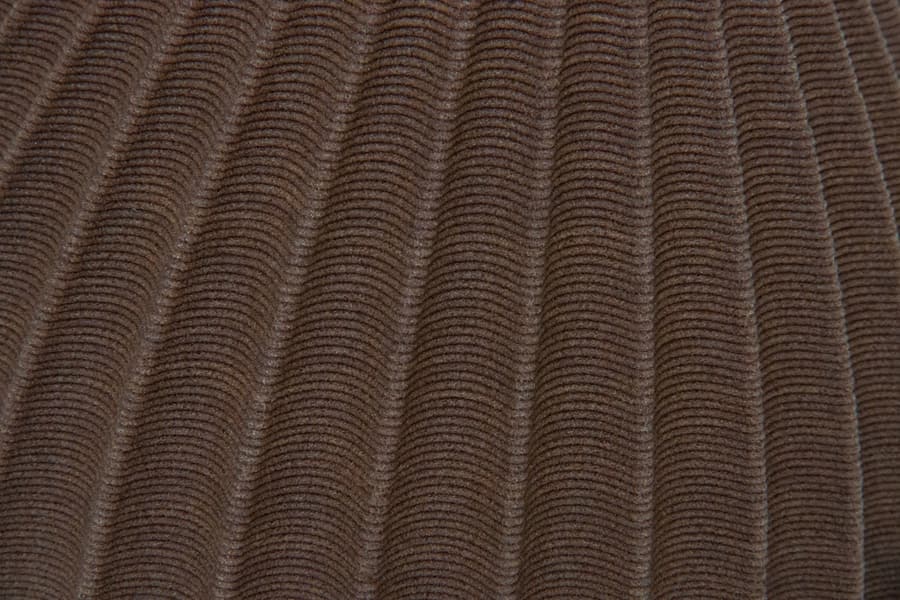
The walnut material close up: layers and grooves

Warm brown · in use

Walnut shells

Ground walnut shells, a leftover from food production, mixed with PHA and delivered as small grains (pellets). Warm brown, matt and soft to the touch. It's the material I know best, and the one I most often start with.

Supplier: Nuterials ApS, Copenhagen
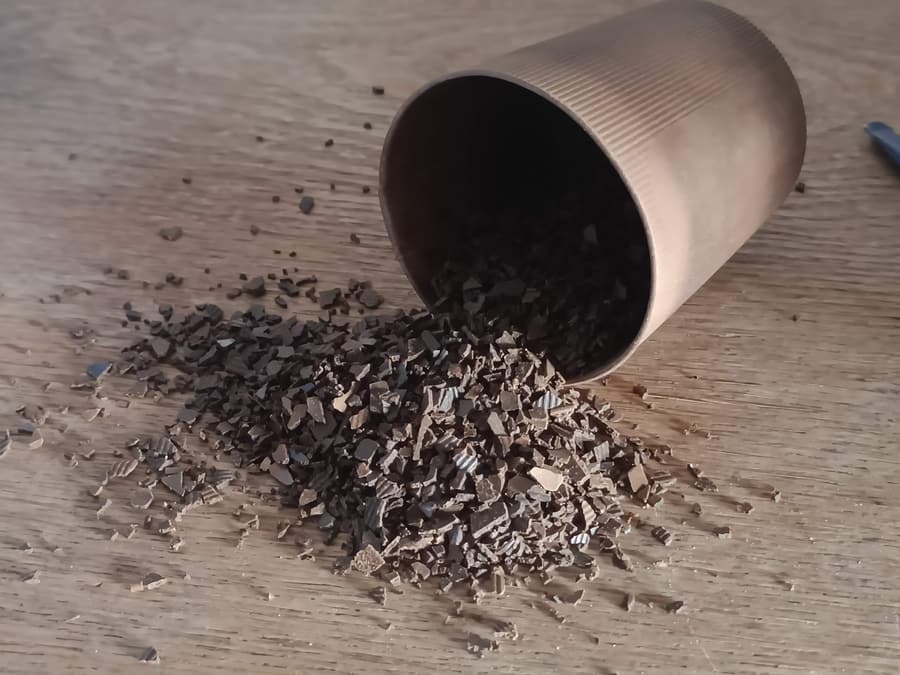
Coffee material as granulate next to a printed cup

Almost black · in use

Coffee grounds

Used coffee grounds, collected and turned into a material that can be printed. Deep and almost black, with a faint smell of roasted coffee. For things that should be noticed.

Supplier: Grounded, Denmark

In short

Four questions I often get.

What is PHA?
PHA (polyhydroxyalkanoate) is a plastic that bacteria form when they are fed sugar or plant oil. It isn't made from oil. It binds the shells and the grounds together so the material can be melted and printed.
Where does it come from?
The walnut shells are leftovers from food production. Nuterials in Copenhagen grinds them and mixes them with PHA. The coffee grounds are used coffee, which Grounded in Denmark turns into material. I get both as pellets directly from them.
How does it become a lamp?
I print pellets directly on large printers I've built myself. No spools, no moulds and no extra step. See the workshop
What about recycled plastic?
I'm also testing recycled PET and plastic waste that I shred myself. It's plastic from oil that gets one more life, and it can do something else: be translucent and stand outside. It's kept separate from walnut and coffee. Neither can be ordered yet.

Documentation

What I know. And what I don't know yet.

I don't dress it up. Here's what's documented and who says so. And what's missing.

Documented

  • No ecotoxicity foundThe Danish Technological Institute tested the walnut material for ecotoxicity and found none.
  • REACHAccording to Nuterials, the raw materials in the walnut material comply with REACH and the rules for food contact.
  • No SVHCs above 0.1 %According to Nuterials, for the raw materials in the walnut material.
  • Named suppliersNuterials ApS (walnut) and Grounded (coffee). I buy directly from them.

Not documented yet

  • Fire classificationThe printed shades haven't been fire tested. If your project requires a class, say so from the start.
  • Photometric dataI don't have photometric files (IES/LDT) for the shades yet.
  • Carbon footprintNo life cycle assessment (LCA) has been made for a finished lamp.
  • Food contact for the finished thingsThe bowls are not approved for food, even though the raw materials follow the rules.

If you need the papers for a project, write. I'll send what I have. For professionals

The first Lili Lamps shades in PLA, lit
The first Lili Lamps, printed in PLA. They are no longer in production.

Why

Why I started thinking in materials.

Lili Lamps started in PLA, and PLA is part of the story. It was PLA that made it possible to print the lamps close to the customers, around the world.

But the further I got, the more I began to think about the material itself. Where does it come from? What does it take, and what does it leave behind? So I went looking for the best materials I could find. I want to show that 3D-printed things can be made from plants and food leftovers instead of new plastic from oil. That's where we need to go.

Lili Origins · prototype

Next step: every lamp gets its own origin.

I'm working on a way for every lamp to tell which batch of shells it was printed from. It's a prototype with example data.

See the prototype →