The workshop
Printed, not moulded.
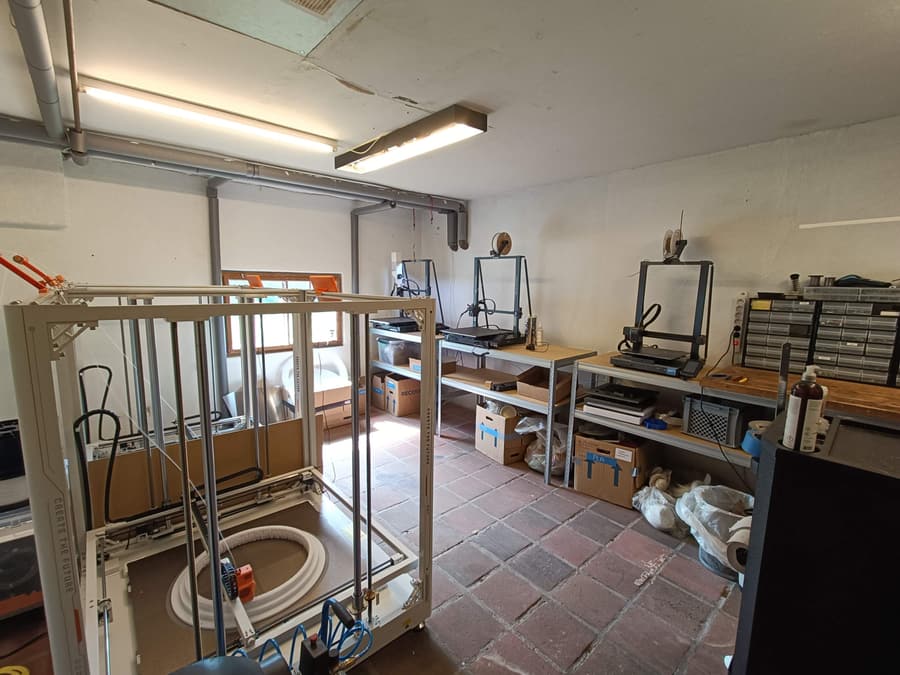
Most products start with a mould. It costs money, takes time and locks the design. I skip the mould and print directly from the file, on large pellet printers I've built myself.
The process
From grain to lamp.
Four steps, and I do all of them.
The material
The material arrives as small grains, called pellets. No spools and no extra step.
The printer
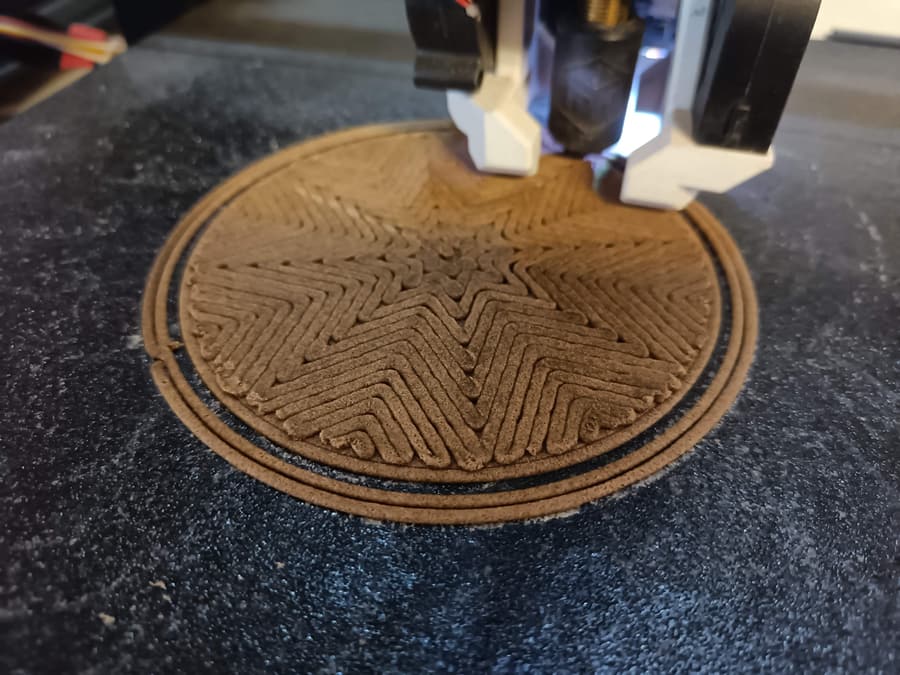
The printer melts the grains and lays them down one thin layer at a time. A large shade spends many hours in the printer. That's also why it costs what it does.
Layer by layer
The grooves are the print itself. I don't hide them. They are what gives the light its shape.
To you
I print once you've said yes, check every shade and ship it straight from the workshop.
Next step
Printed close to you. That's the plan.
I chose 3D printing because it makes it possible to produce close to the customer. The file travels, not the lamp. When I sold a lamp to Australia, it was printed over there. It had travelled 50 kilometres when it arrived.
Right now I'm in the prototype phase. I work with the materials here in Denmark and make sure everything is in order. After that I'll look at how Lili Lamps can be printed around the world again.
You're welcome to visit the workshop by appointment. Write to me